
Alcohol Awareness Month began in 1987. The National Council on Alcoholism and Drug Dependence created it to help people understand how alcohol affects our communities.
How Alcohol Affects You
Alcohol use has a big impact on the health of people in North Carolina.
- Alcohol is one of the top causes of preventable death in the state.
- On average, 15 people in North Carolina die every day because of alcohol use.
Many people don’t know that no amount of alcohol is safe. Every drink can increase the risk of harm.
Alcohol use can increase the risk of:
- Injuries — like car crashes, overdoses and falls
- Homicide — one in three people who died from homicide in NC had alcohol in their system
- Suicide — one in four people who died by suicide in NC had alcohol in their system
- Violence — including domestic and sexual violence
- Cancer — alcohol is a Group 1 carcinogen, the same category as tobacco, asbestos and radiation
- Chronic diseases — such as high blood pressure, heart disease and liver disease
- Social and wellness problems — including mental health issues, memory and learning problems, and relationship challenges
Making Better Choices
Drinking less alcohol — or not drinking at all — can lower your risk of many health problems, including cancer.
How to Check Your Alcohol Use
It is important to understand what one alcoholic drink looks like.
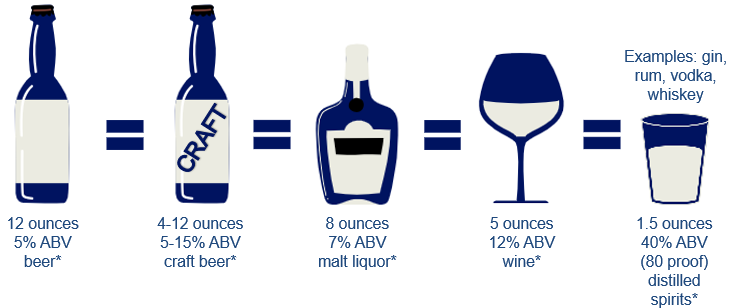
| Alcoholic Drink | Amount of Alcohol |
|---|---|
| Beer - 12 ounces | 5% |
| Craft Beer - 4-12 ounces | 5-15% |
| Malt Liquor - 8 ounces | 7% |
| Wine - 5 ounces | 12% |
| Distilled Spirits (80 proof) - 1.5 ounces Examples: Gin, rum, vodka, whiskey | 40% |
The alcohol content of different types of beer, wine and liquor may vary.
To see how many drinks are within a container, use the National Institute on Alcohol Abuse and Alcoholism’s Drink Size Calculator.
It is important to understand what alcohol use looks like.

| Drinking Level | Number of Drinks |
|---|---|
| Moderate | One drink or less in a day for women Two drinks or less in a day for men |
| Binge | Four or more drinks on one occasion for women Five or more drinks on one occasion for men |
| Heavy | Eight or more drinks during a week for women 15 or more drinks during a week for men |
How to Reduce Your Risk
You can take steps to lower your risk of harm from alcohol.
If You Do Not Drink
- Do not start. Alcohol has no health benefits and can cause harm.
If You Do Drink
- Cut back. Every drink increases the risk of problems like cancer, heart disease and early death.
Avoid alcohol if you:
- Are pregnant
- Are under 21
- Are in recovery
- Have certain health conditions
- Have a family history of alcohol-related cancers
- Take medications or drugs that can interact with alcohol
For adults 21 and older who choose to drink, drinking less is always better.
Learn More
- U.S. Alcohol Policy Alliance: Alcohol Consumption Guidelines for the American People
Get Help Now
- Tips to Drink Less – the Centers for Disease Control and Prevention offers ideas to help you cut back.
- Talk with your health care provider if you are worried about your drinking. If you don’t have one, you can contact your local health department.
- Find treatment for alcohol and other substance use concerns.
Resources for Partners and Communities
- North Carolina Alcohol and Related Harms Data page – Learn more about alcohol use and its impact.
- North Carolina Alcohol Use and Related Harms Prevention page – Learn about alcohol-related harm, and prevention efforts in NC.