This site provides resources and information for the community, employers and health care providers to reduce the impact of diabetes in North Carolina. Learn to manage diabetes or target risk factors that lead to diabetes.

Diabetes Prevention
Diabetes Management

Diabetes Advisory Council
The Diabetes Advisory Council (DAC) works to reduce the burden of diabetes through coordination among the many stakeholders in diabetes control in North Carolina.
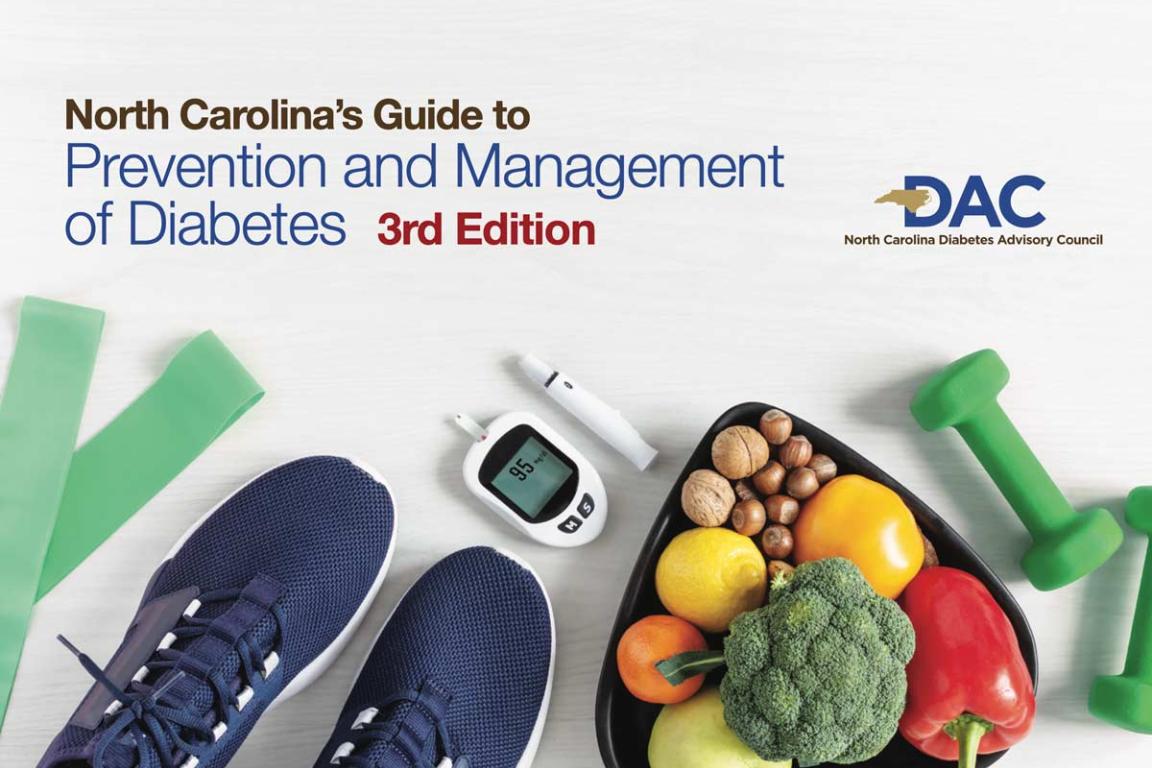
North Carolina’s Guide to Prevention and Management of Diabetes, 3rd Edition
This guide includes basic information about diabetes, its effects on the North Carolina population, and suggestions on how individuals can prevent and manage the disease.
| Diabetes Primary Prevention | Diabetes prevention for people at high risk | Diabetes management | Prevention of complications | |
|---|---|---|---|---|
| Genetics | Modifiable Risk Factors for Diabetes | Prediabetes (A1C=5.7-6.4) | Diabetes (A1C≥6.5) | Diabetes Complications |
Some individuals are born with increased risk for developing diabetes. Non-modifiable risk factors include:
Share your personal and family history of diabetes with your healthcare team and ask to be screened for diabetes. | Individuals can lower the risk of developing diabetes by:
| Once blood sugar increases to the range shown above, diabetes can still be prevented or delayed by:
| Once blood sugar increases to the level shown above, diabetes needs to be managed and complications prevented by:
| Manage and prevent diabetes complications, by working with your healthcare team to protect your:
|
Resources
Speaking the Language of Diabetes:
Language Guidance for Diabetes-Related Research, Education & Publications

Diabetes North Carolina is a program of the
Community and Clinical Connections for Prevention and Health Branch.