
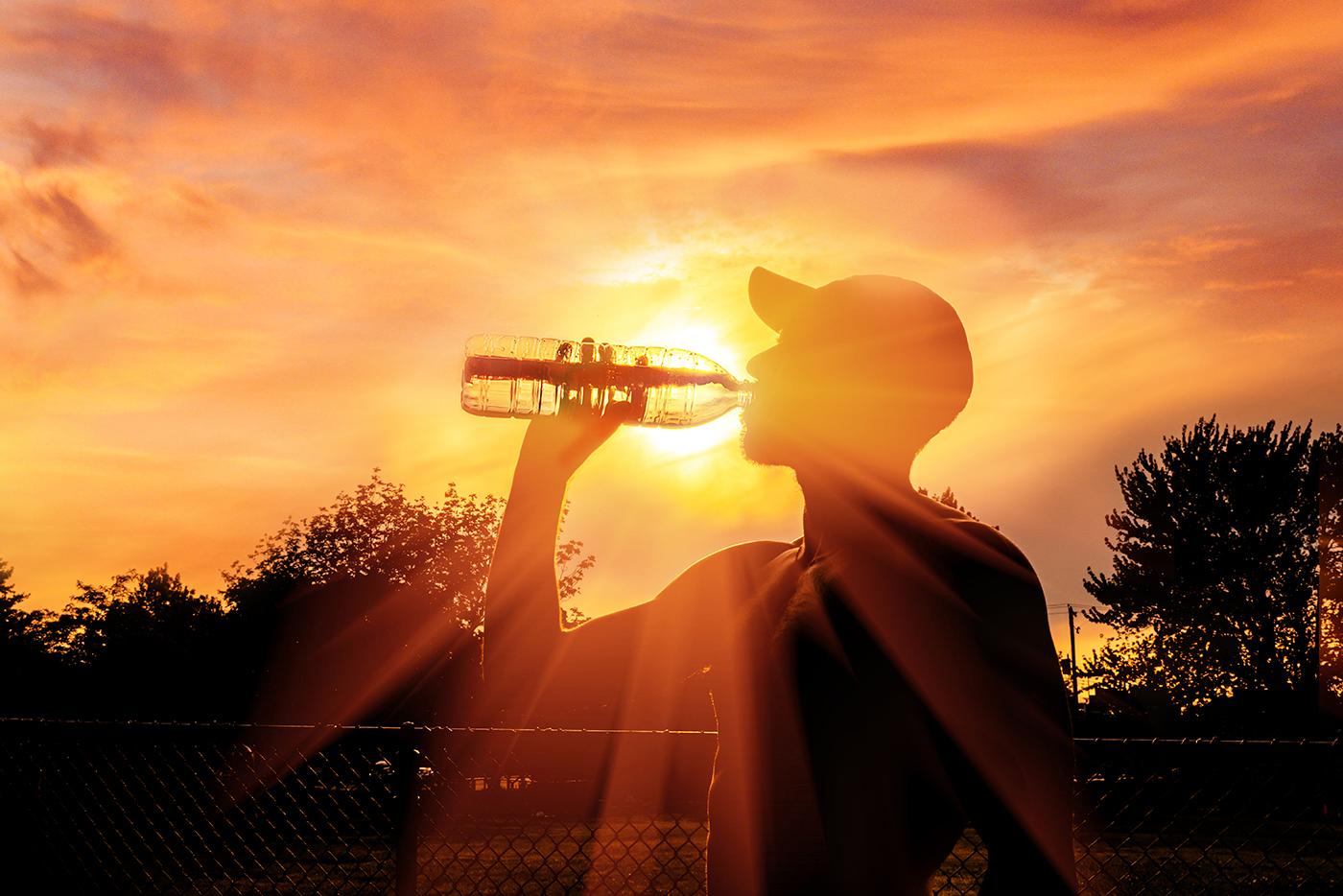
A dangerous heat wave is expected in North Carolina this Fourth of July Weekend. High temperatures will likely exceed 100 degrees. Combined with humidity, it could feel like 110 degrees.
Soaring summer temperatures affect people's health. From May 1 to June 28 this year, more than 1,808 people across the state went to the emergency room because of heat-related illness. That's above the average of 1,363 visits in the same period from 2021 to 2025. (Check out our Weekly NC Heat-Related Illness Reports.)
Be extra careful in the heat, especially if you spend a lot of time outdoors or don't have access to air conditioning. If you're out in the heat too long, it can lead to dehydration, overheating, heat illness and even death.
Drink plenty of water and be alert for signs of heat-related illness.
On this page:
"Heat-related illnesses can affect anyone, regardless of age or physical condition, so it’s important for everyone to stay alert when spending time outside over the holiday. Recognizing the symptoms of heat illness early is key to preventing serious complications.”
-Dr. Zack Moore, NCDHHS State Epidemiologist
Who’s Most at Risk?
Anyone can get sick from the heat, but some people are more likely to have serious problems, including:
- Outdoor workers (like construction and farmworkers)
- Infants and young children
- Pregnant women
- Older adults
- Athletes and coaches
- People with health problems
- People without access to air conditioning or reliable housing
Learn more: Understanding Heat Index and Who's at Risk
Know the Signs of Heat Illness
Heat-related illnesses can come on quickly. Watch out for these warning signs.
Signs of heat exhaustion
- Dizziness
- Heavy sweating
- Nausea
- Pale or clammy skin
- Muscle cramps
If you or someone else has these symptoms, move to a cooler place, drink water and get medical help if needed.
Signs of heat stroke
Heat exhaustion can lead to heat stroke, which is a medical emergency. Symptoms of heat stroke can include:
- Confusion
- Slurred speech
- Loss of consciousness
If you or someone else is showing signs of heat stroke, call 911 immediately. Move to a cooler area, loosen clothing, remove extra layers, and use water/ice and cold, wet towels to cool the entire body.
Learn more: Signs of Heat Illness and What to Do
4 Ways to Stay Safe in Hot Weather
Here are a few easy things you can do to avoid heat illness:
Stay Hydrated
Drink lots of water during the day — even if you’re not thirsty. Avoid too much caffeine or alcohol, which can make you more dehydrated.
Limit Time Outside
Try to avoid being outdoors during the hottest part of the day (usually between 11 a.m. and 4 p.m.). Wear lightweight, loose-fitting clothes, and take breaks in the shade or indoors.
Find Cool Places
If your home doesn’t have air conditioning and the temperature is above 95°F, go to a public building like a library or community center to cool off.
Stay Informed
NCDHHS sends out heat health alerts when temperatures get dangerously high. From May 1 to June 29 this year, we've sent more than 692 county-level alerts.
Sign up for alerts (available in English and Spanish)
Get more tips: Tips for Grilling, Swimming and Beating the Heat
What NCDHHS is Doing to Help
To keep North Carolinians safe, NCDHHS:
- Sends out hundreds of local heat health alerts each summer
- Shares weekly NC heat-related illness reports each summer
- Creates shareable educational and communications materials about extreme heat dangers and safety tips
- Hands out water bottles, cooling towels and hats with safety tips
- Helps cities and counties make plans to deal with extreme heat
North Carolina summers can be dangerous if you're not prepared. Take care of yourself, check on your neighbors — especially the elderly — and know the signs of heat illness. A little planning goes a long way when the temperatures rise.
Stay cool, stay safe!
Related press release: NCDHHS Urges Caution Outdoors Amid Late June, Early July Heat Wave